"The happy man is the one who had banished his fears, even his fear of death, and who lived pleasantly, surrounded by his friends and his philosophical companions."
Despite all the technological advancements humans have made, we don't seem to have progressed much in areas that truly matter; like making our lives happier and more fulfilling. We are all expected to follow the same life plan; go to school, find a job, get married, buy a house and a car, have kids, buy a lot of stuff, spend 30 years working to pay for it all and then retire. This might work for some people. Since we are not all the same, many people are pushed by society into a lifestyle which doesn’t really suit them and cannot satisfy them.
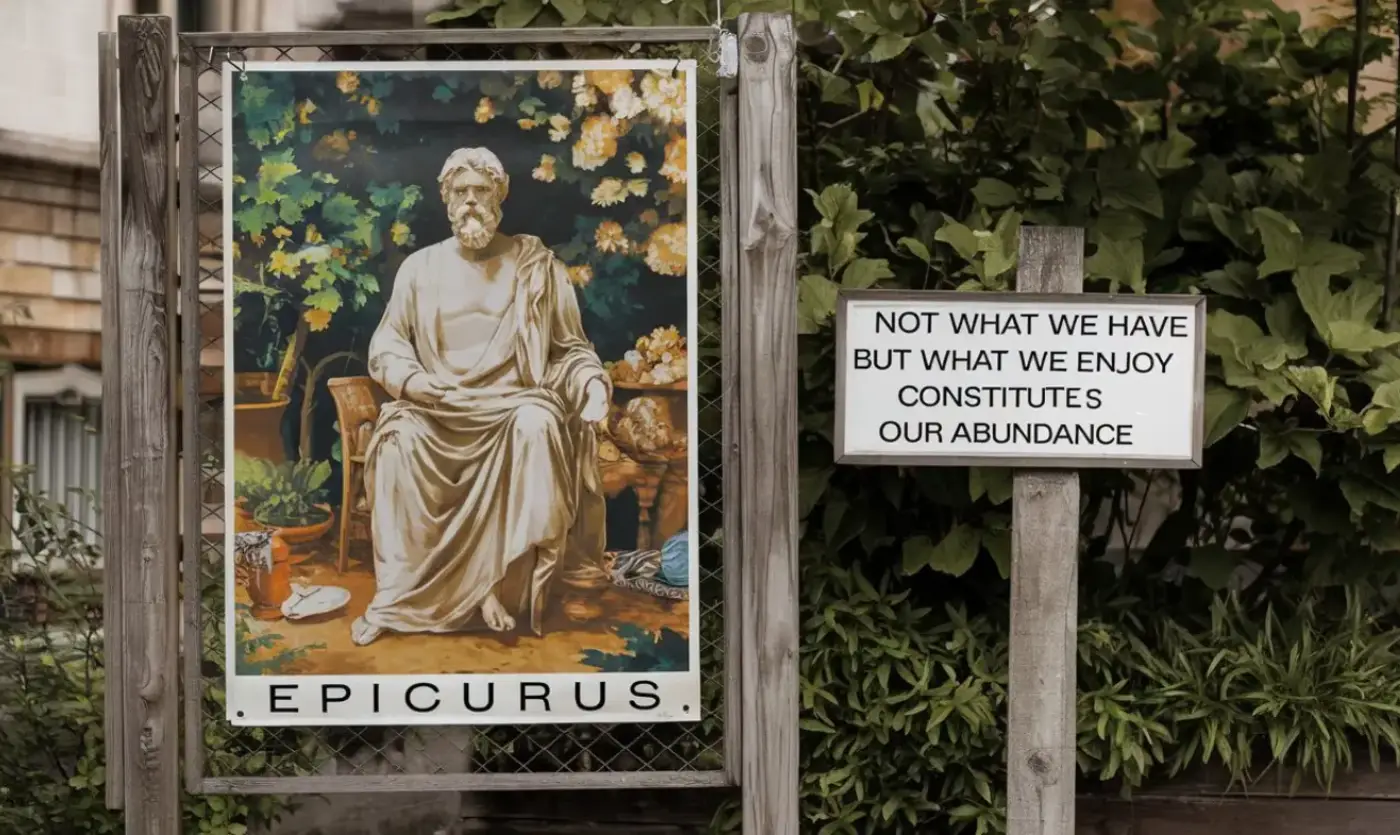
Believe it or not, 2000 years ago, things were better in many ways. It was common for groups of friends to live together, minimizing their material possessions and needs, running their own small businesses, and devoting their time to intellectual and artistic pursuits as well as philosophical conversations. Hundreds of thousands of people lived in communes like this throughout the Mediterranean. They were inspired by Epicurus, an ancient Greek philosopher and the founder of a unique school of philosophy. Epicurus and his followers were atheists and quite rational, favoring empirical evidence and logic over belief. The Christian church obviously had a problem with this and, in the 6th century, banned all pagan schools that conflicted with Christian dogmas. Since the Church doesn’t hold that much power today, it’s time we bring back the Epicurean communes.
“Don’t fear god, don’t worry about death;
what is good is easy to get, and what is terrible is easy to endure.”
– The four-part cure of Epicurus, as found on the Herculaneum Papyrus
Epicurus and his philosophy
“A free life cannot acquire many possessions because this is not easy to do without servility to mobs or monarchs.”
Epicurus was born in 341 BC on the island of Samos in Greece. He was the first philosopher thinking about what makes people happy. Most philosophers before him were contemplating questions that didn’t really interest the common citizen. They focused on making people good and virtuous, while Epicurus set up a school focused on studying happiness. The school he founded in Athens, the “Pleasure Garden,” was open and free for everyone. He and his students would gather in the garden to engage in conversations on science, philosophy, and art, in the pursuit of the good life. The curriculum included freeing the students from their fears and showing them the real path to happiness.
“The cry of the flesh: not to be hungry, not to be thirsty, not to be cold. For if someone has these things and is confident of having them in the future, he might contend even with Zeus for happiness.”
There were rumors about the school hosting lavish feasts and orgies every night. However, Epicurus’ idea of hedonism was different. In his opinion, the pleasant life is achieved by learning to be satisfied with simple things, basic foods and clothes, while rejecting the unnecessary desire for wealth, fame and status, and getting rid of all fears and anxieties. Epicurus valued the pleasure of philosophical conversation with friends over the pursuit of physical pleasures like food, alcohol and sex. His diet consisted of bread, olives and occasionally some cheese. Instead of having 20 virgins in his bed, as ancient gossipers claimed, Epicurus said he had married philosophy.
The reason Epicurus valued friendship over romantic, sexual relationships was his observation that jealousy, suffering, hate, misunderstandings and misery existed in most romantic relationships. Friendships, however, seem to bring out the best in us. In my opinion, one of the reasons for this is the feeling of possessiveness we feel toward our romantic partners and the high expectations we place on them. We rarely feel that our friends shouldn’t have any other friends besides us, and we don’t expect them to meet all our needs. It was not enough for Epicurus to see his friends occasionally, so he invited them all to move in with him. Everybody had their own space in his house and there were common rooms for hanging out. They stopped working for others and made a living running their own little businesses. Epicurus believed it was more important to have someone to eat with than to have something to eat.
I particularly relate to Epicurus’ view of work. He believed that what makes work satisfying isn’t the money or status, but the ability to work alone or in small groups and feel that we are being helpful, improving the world, and making a difference, even if it’s only a small one.
“Self-sufficiency is the greatest wealth of all, and the greatest fruit of self-sufficiency is freedom.”
Epicurus also considered financial freedom necessary for the good life. Financial freedom is easy to acquire if we lower our needs and learn to be satisfied with little. Epicurus believed that we need to find calm and peace of mind to be happy, and that these are not found in luxury but in spending time on our own, meditating, reading, thinking, writing, and more.
“The time when most of you should withdraw into yourself is when you are forced to be in a crowd.”
The legacy of Epicurus
Epicurus’ fans include Thomas Jefferson, John Locke, Arthur Schopenhauer, Friedrich Nietzsche, and even Karl Marx, who wrote his doctoral thesis about him. Epicurus’ influence on Thomas Jefferson is reflected in the Declaration of Independence. The “pursuit of happiness” probably wasn’t meant to refer to the pursuit of wealth, as it’s misunderstood today.
“As you say of yourself, I too am an Epicurean. I consider the genuine (not the imputed) doctrines of Epicurus as containing everything rational in moral philosophy which Greece and Rome have left us.”
–Thomas Jefferson (Letter to William Short, 1819)
Although they might not even be familiar with Epicurus’ philosophy, we can find similar thinking today among people who identify with the Minimalist, Voluntary Simplicity, and Slow Life movements. Today, Epicurus’ philosophy seems more useful than ever. In our overworked, overweight, over-stressed, and over-medicated consumerist society, we need to be reminded of what we should really be after. Instead of letting the advertisements we are bombarded with convince us that we want and need whatever they are selling, we need to recognize that shopping and acquiring material wealth won’t make us happy and that we should devote our precious time to the important things. By reducing our material needs, we can invest the extra time and energy into much cheaper or even free activities that will truly enhance the quality of our lives: learning and developing new skills, creating, reading, playing instruments, dancing, and socializing with friends.
“If thou wilt make a man happy, add not unto his riches but take away from his desires.”
I hope that someday all shopping malls will be legally required to put up posters warning people that shopping won’t make them happy and that they are wasting their precious time and money, just like cigarette manufacturers are required to display signs on their products warning customers about the harmful effects of smoking tobacco.
I wrote this article after watching a video entitled Epicurus by the amazing School of Life. http://www.theschooloflife.com/london/about-us/about-us#&panel1-5